

For twenty years the deal was simple. Google found the buyer, you paid for the click, and the sale happened on your site. Your site, your checkout, your customer, your data.
That deal is being renegotiated right now, and most brands haven't noticed because their ROAS still looks fine.
WHAT'S ACTUALLY HAPPENING
The transaction is moving upstream
Google has been shipping the pieces all year. AI Mode answers the question instead of listing ten links. Universal Commerce Protocol standardises how an AI agent reads your products, your pricing, your stock and your delivery. Business Agent puts a branded assistant on Google, already live for a set of large national retailers. And Buy with Google closes the loop by taking payment without the shopper ever reaching your domain.
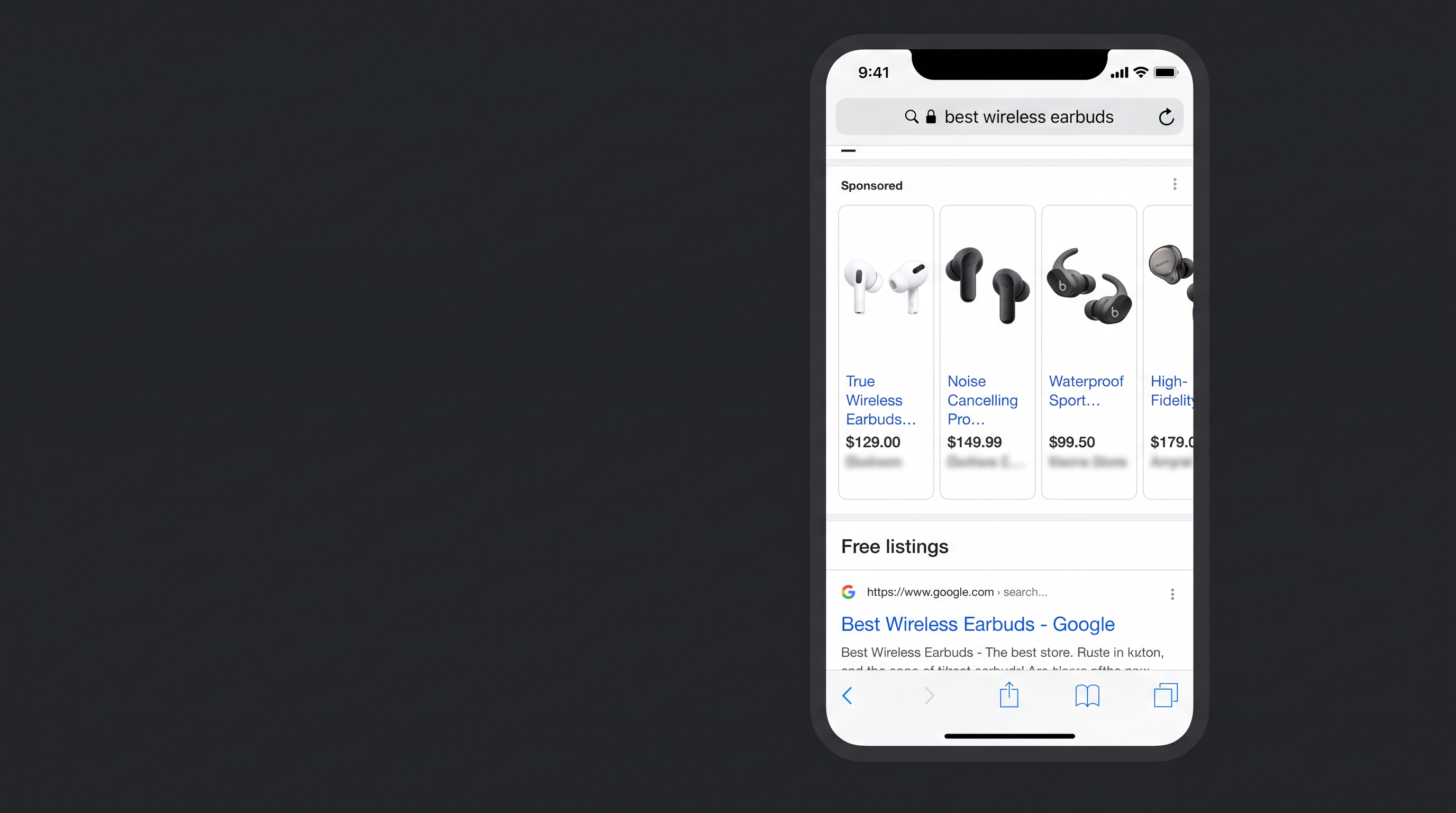
The answer sits above everything. The listings you pay for start below the fold.
Put those together and the journey compresses. Discovery, comparison, advice, offer and checkout can all happen inside Google.
Your product still sells. You still get paid. But look at what you stop getting.
The old click | The agentic sale |
|---|---|
Visitor lands on your site | Never reaches your domain |
Pixel fires, audience builds | No session, no retargeting pool |
Email captured at checkout | Google holds the relationship |
You control upsell and bundle | The agent picks what to show |
Post-purchase flow is yours | Klaviyo never sees the buyer |
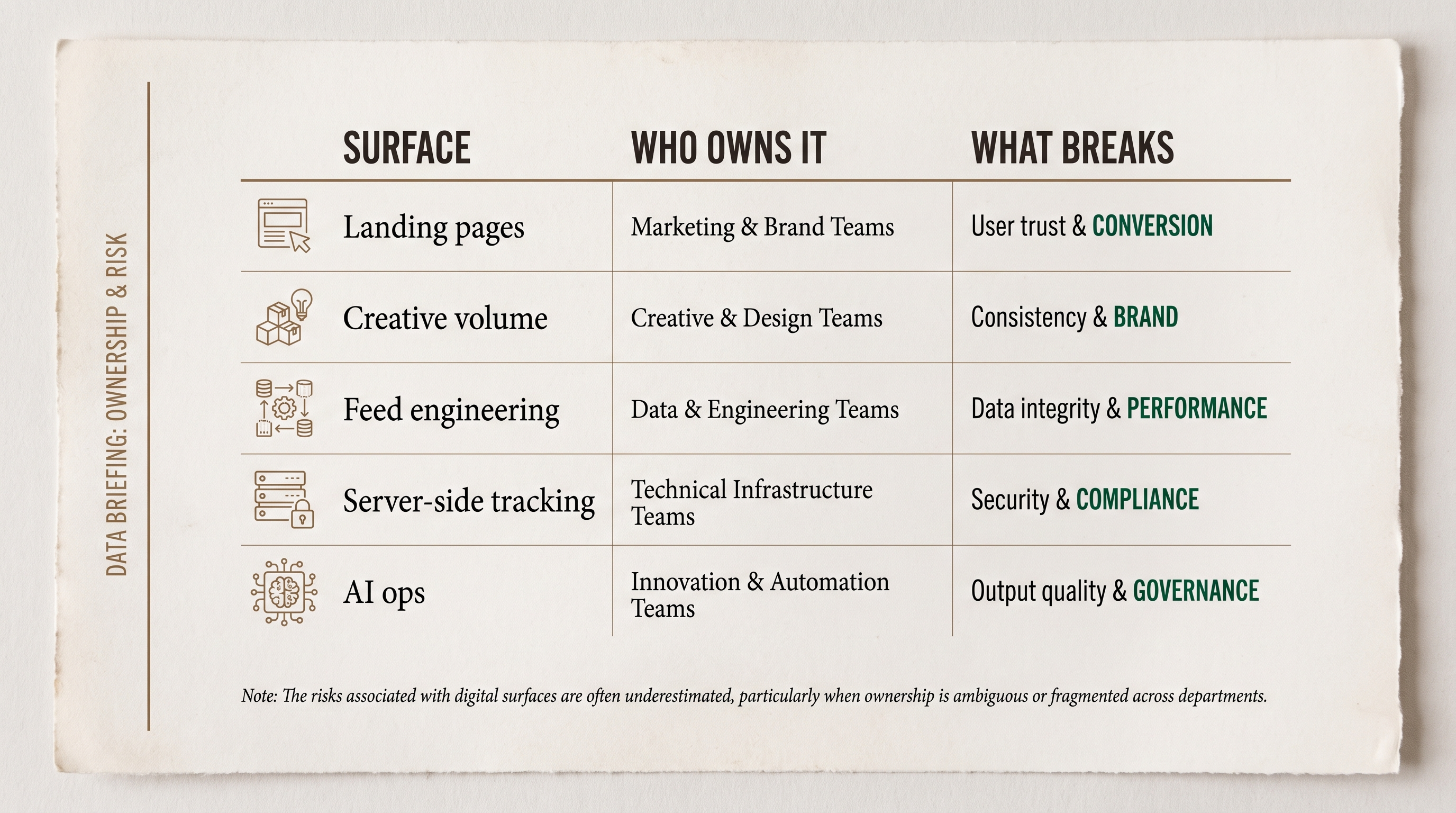
Same sale, different owner. Everything after the transaction moves to Google's side of the line.
That last row is the one that should worry you. A brand whose repeat rate carries its margin just lost the mechanism that produces repeats.
THE SQUEEZE
Fewer slots, same spend
There's a second-order effect and it's already measurable. When an AI answer sits on top of a shopping search, the surface below it compresses. Fewer product slots. Fewer organic listings. The same advertisers competing for less room.
You don't see this as a price rise. You see it as impressions quietly flattening while cost per click drifts up and everyone blames seasonality.
Check it yourself. Pull impression share on your top Shopping campaigns for the last six months and put it next to average CPC. If impressions are flat or down while CPC climbs and your budget hasn't moved, you're paying the squeeze.
THE PART NOBODY WANTS TO HEAR
Opting out isn't a strategy
You can stay out of UCP. Plenty of brands will, on principle, and I understand the instinct.
The problem is that the buyer doesn't care about your principle. If a shopper asks an agent for a product and your competitor is purchasable in that answer while you're three clicks away, you lose the sale. Not on price. On friction.
Every distribution shift has worked this way. Brands that sat out marketplaces in 2015 protected their margin and lost their volume. The ones that went in on their own terms, with their own data discipline, kept both.
You don't get to choose whether buying moves into the agent. You get to choose whether you're legible to it.
WHAT TO ACTUALLY DO
Four moves, this quarter
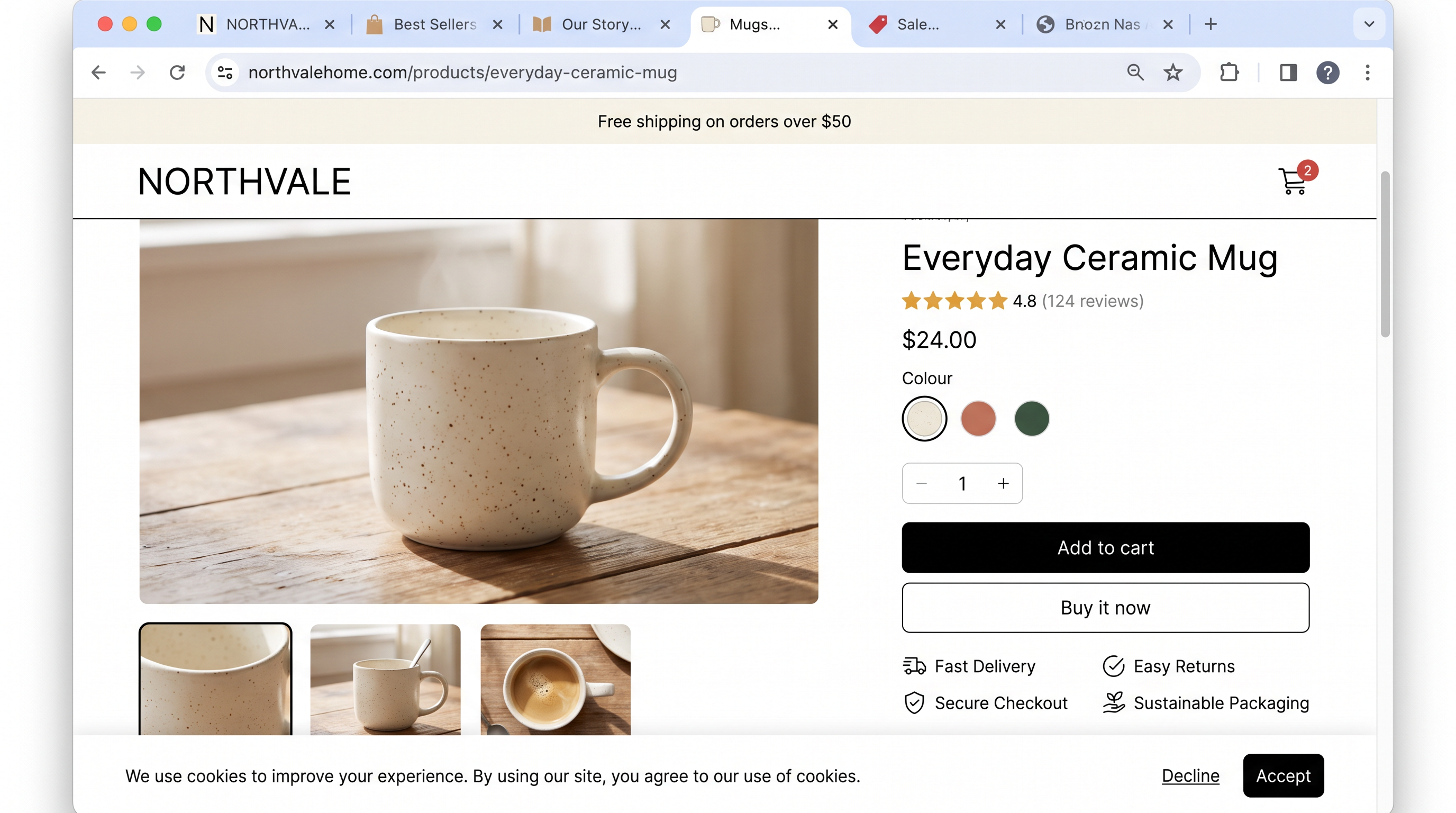
Everything an agent needs to recommend you sits on the product page and in the feed behind it.
Write the feed for an agent, not a search box. Merchant Center now takes conversational attributes: answers to common product questions, compatible accessories, substitutes. An agent asked "will this fit my model" reads that field. Your competitor filled it in.
Get your first-party capture off the checkout. If the only place you collect an email is the order confirmation, an agentic sale costs you the customer entirely. Move capture earlier, into the product experience, into the quiz, into whatever happens before the buy.
Measure the squeeze deliberately. Impression share against CPC, monthly, on your top five Shopping campaigns. Put it in the same report as blended ROAS so it can't hide.
Trust last click less than ever. When part of the journey happens inside Google, platform attribution gets more confident and less correct at the same time. Blended in Triple Whale or Northbeam, checked against a geo holdout twice a year. That's the only number that survives this.
THE REFRAME
Own the inputs, not the surface
You are going to keep losing control of the surface. The placement, the answer, the layout, the moment of purchase. That's been the direction since Performance Max and it hasn't reversed once.
What you keep is everything the machine can't invent. Product data quality. Margin structure. The conversion signal you feed the bidder. The reason someone picks you over the identical thing next to you in the answer.
The account I mentioned earlier does $2.2M a month. When we tightened its structure it added 18% revenue in a week on flat spend, roughly $396,000 a month, and moved ROAS from 4.0x to 4.72x. None of that came from a placement. All of it came from inputs.
That's the work that still compounds when the surface belongs to somebody else.
Free. Every feed attribute an agent reads, and where your first-party capture leaks.
Wondering whether the squeeze is already showing in your account? Reply with your impression share trend and I'll tell you what I see. Just hit reply.
Talk soon,
Patrick